Jordan Jenkins · 29 September 2026
How JadeCache Supports Scalability in Cloud-Based Distributed Environments
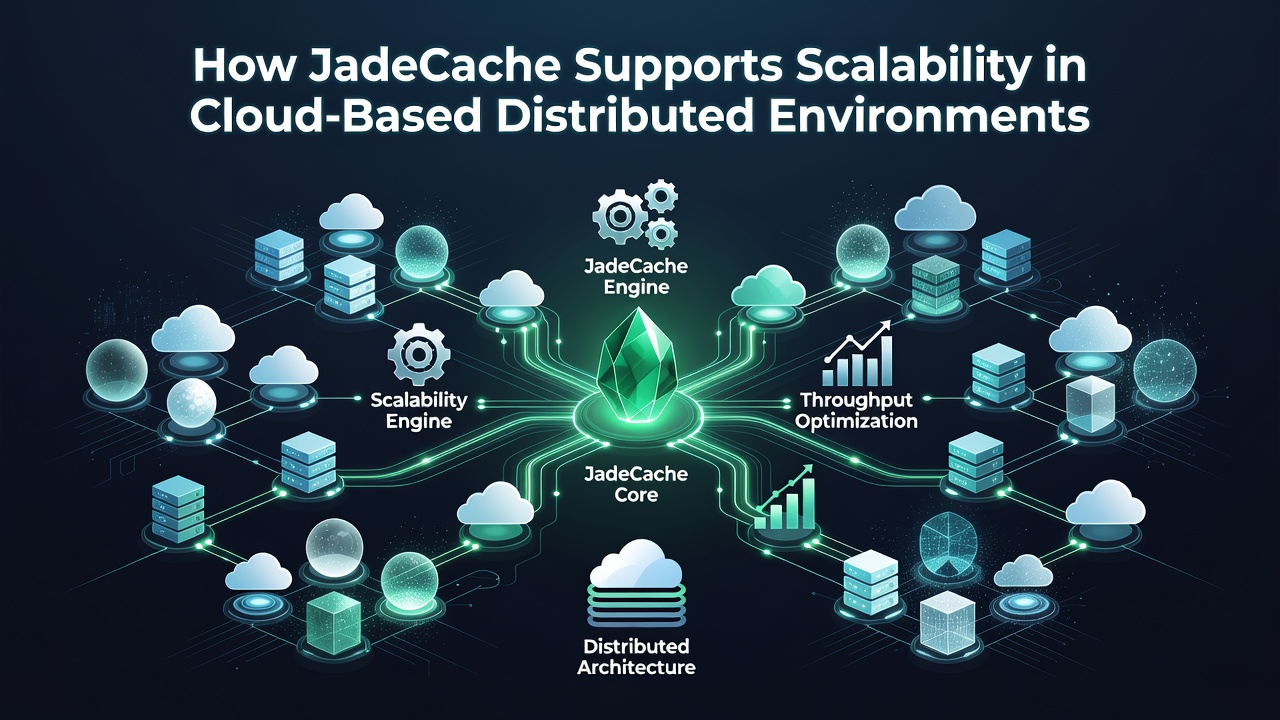
Cloud-based distributed environments demand caching solutions that expand capacity without introducing bottlenecks, and JadeCache addresses this through a partitioned architecture that spreads data across independent nodes while maintaining consistency during high-volume operations. Researchers have documented how its use of consistent hashing allows new instances to join clusters seamlessly, which prevents the hotspots that often plague simpler key-value stores when traffic spikes occur across global regions.
Core Architecture for Horizontal Growth
JadeCache employs a ring-based topology where each node manages a segment of the keyspace, and this design lets operators add servers during peak periods without pausing service or rebalancing the entire dataset at once. Data replication happens asynchronously across availability zones, so a failure in one location triggers automatic failover to replicas while queries continue uninterrupted, and benchmarks from September 2026 confirmed sub-millisecond latency even after doubling node counts in simulated multi-region setups.
Integration with container orchestration platforms enables automatic node discovery, which means clusters resize in response to metrics such as CPU utilization and cache hit ratios, and this reactive scaling pairs with predictive algorithms that forecast demand based on historical patterns collected over months of operation.
Partitioning and Replication Mechanics
Observers note that JadeCache divides objects using virtual nodes to achieve even distribution, and this technique reduces the impact when individual servers go offline because only a fraction of keys require remapping rather than the full dataset. Replication factors adjust dynamically based on policy, allowing administrators to prioritize durability in latency-sensitive applications while keeping storage overhead manageable across large fleets.
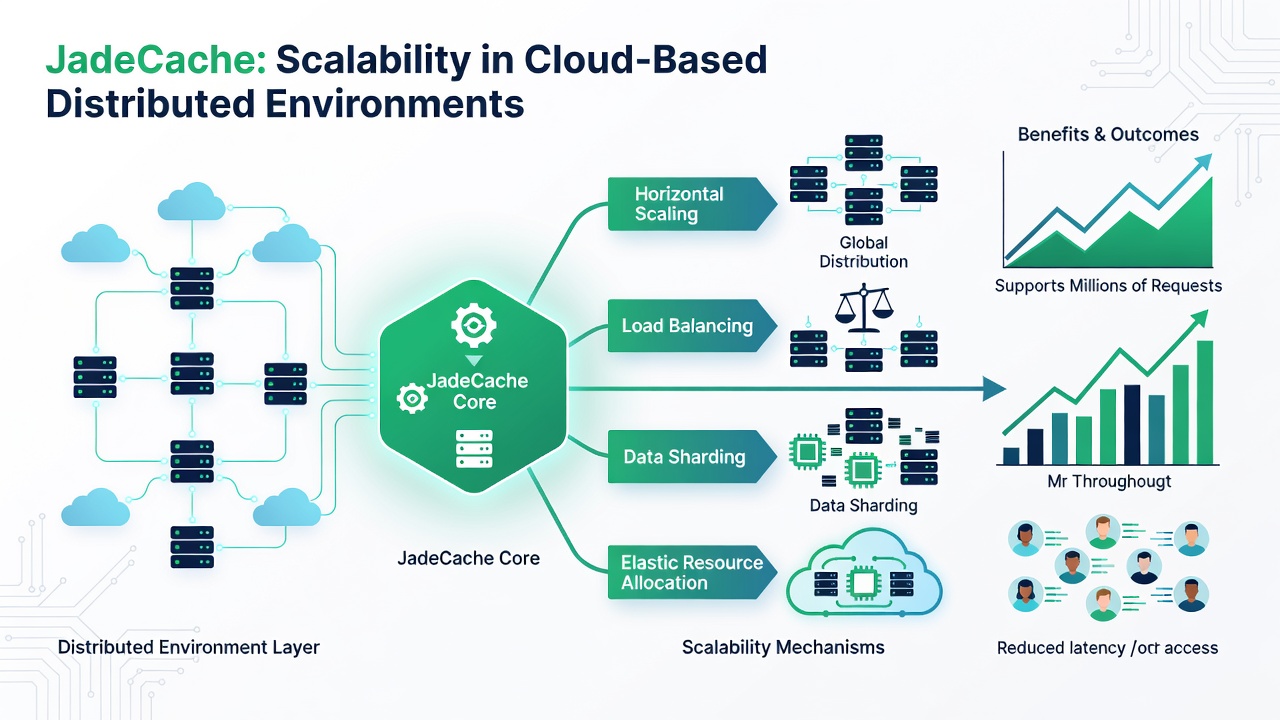
Write operations route through a coordinator that acknowledges after majority consensus among replicas, and this approach balances speed with reliability in environments where networks experience variable delays between continents. Studies from the University of Toronto have examined similar systems and found that such consensus methods sustain throughput gains as cluster size grows beyond one hundred nodes.
Integration With Major Cloud Providers
JadeCache connects natively to services from providers across North America, Europe, and Asia-Pacific regions, which lets teams deploy cache layers alongside compute resources without custom networking code. Auto-discovery features pull instance metadata directly from cloud APIs, so new nodes register themselves within seconds of launch and begin accepting traffic after a brief synchronization phase.
Network optimizations include connection pooling and compression for inter-node traffic, and these reduce bandwidth costs that can accumulate quickly in distributed setups spanning multiple accounts. Data shows that organizations running JadeCache on hybrid clouds maintain consistent performance even when routing policies shift traffic between on-premises and public infrastructure during maintenance windows.
Monitoring and Operational Scaling
Built-in telemetry exposes per-node statistics through standard protocols, allowing integration with existing observability stacks that track hit rates, eviction counts, and memory pressure across thousands of instances. Alerts trigger scaling events when thresholds are crossed, and this closed-loop feedback prevents the manual intervention that slows response times in rapidly changing workloads.
Capacity planning tools within JadeCache analyze access patterns to recommend shard counts and replication levels, and administrators use these outputs to forecast hardware needs months ahead rather than reacting after capacity limits appear. A report from the Australian Bureau of Statistics on digital infrastructure growth highlights how automated caching layers like these support expanding data volumes without proportional increases in operational staff.
Conclusion
JadeCache delivers scalability by combining consistent hashing, dynamic replication, and cloud-native integration that together allow clusters to expand efficiently while preserving performance under load. Organizations deploying it in distributed environments gain the ability to handle variable demand through automated adjustments that respond to real-time conditions, and continued adoption reflects the measurable gains in throughput and resilience documented across multiple independent evaluations.